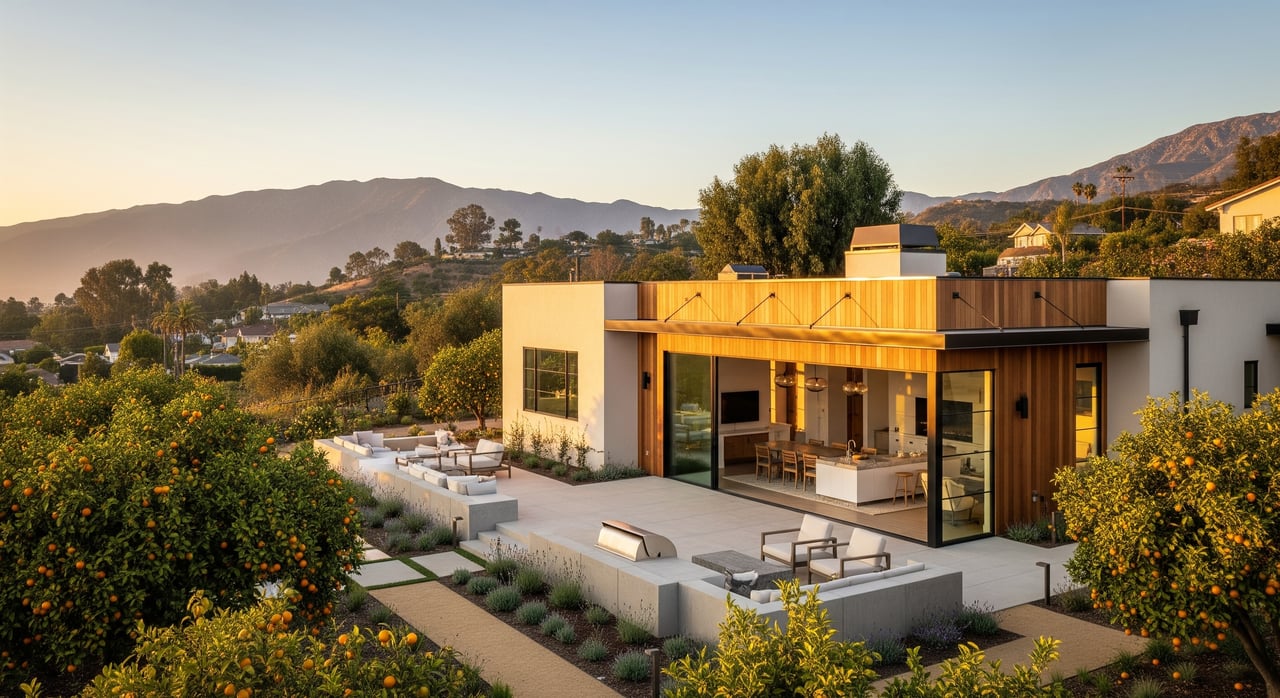
Thinking about adding an ADU to your Redlands property but unsure how to pay for it? You are not alone. Many Inland Empire homeowners want the rental income and flexibility an ADU provides, yet the financing path can feel confusing. In this guide, you will learn the main loan options, how lenders may view projected rent, and where to look for incentives that can lower your costs when you choose energy‑efficient equipment. Let’s dive in.
ADU financing paths at a glance
Choosing the right funding path depends on your goals. Start by deciding if you want to keep your current mortgage, if you need construction draws, or if you want the lender to use the home’s future value after the ADU is complete.
Cash‑out refinance
A cash‑out refinance replaces your current mortgage with a larger one and gives you the difference in cash for construction. It works well if today’s rates are close to your existing rate and you prefer a single payment.
- Pros: One loan and one payment; may offer larger loan amounts.
- Cons: You may give up a low first‑mortgage rate; closing costs apply.
- Underwriting: Lenders check your credit, debt‑to‑income ratio, and equity. Some may let you use projected ADU rent to qualify, but policies vary.
Home‑equity loan or HELOC
A home‑equity loan is a fixed second mortgage. A HELOC is a revolving line you draw as needed. Both sit behind your first mortgage, so you keep your original rate.
- Pros: Usually faster to close than a refinance; works well for phased projects or smaller builds.
- Cons: Second liens often have higher rates; HELOC rates are variable.
- Use case: Common for garage conversions, interior ADUs, and finish or contingency costs.
Renovation mortgages (single‑close)
Renovation loans let you finance improvements into one mortgage. Lenders underwrite based on the home’s “after‑improved” value and release funds in draws as work progresses.
- Pros: One closing; lender can consider future value; helpful when buying a home and adding an ADU or when refinancing plus renovating.
- Cons: Requires detailed plans, contractor approvals, and draw inspections; program availability varies by lender.
Construction‑to‑permanent loans
Construction‑to‑perm loans fund the build with interest‑only draws, then convert to a long‑term mortgage. These are often used for larger detached ADUs.
- Pros: Purpose‑built for new construction; clear draw structure.
- Cons: More documentation; interim rates may be higher during construction.
Cash, private or specialty ADU lenders
Some owners pay cash or use local pilot programs, community lenders, or private loans. These options can be faster or more flexible.
- Pros: Speed and flexible underwriting.
- Cons: Availability and terms vary widely. Many programs have eligibility rules, such as income or owner‑occupancy.
Renovation and construction loans you can use
If you need a single loan that covers both the mortgage and ADU work, renovation and construction products can help. Each has unique rules, so you will want to compare features and availability with lenders.
FHA 203(k)
FHA 203(k) is an FHA‑insured mortgage that wraps rehabilitation and renovation costs into one loan. For ADUs, it can work well for conversions or rehab‑style projects rather than full new construction.
- Key features: One mortgage, managed draws, and HUD‑approved consultants for standard 203(k).
- What to know: Mortgage insurance applies. Not every FHA lender offers 203(k). Lender overlays and terms can vary.
Fannie Mae HomeStyle Renovation
HomeStyle is a conventional renovation mortgage that finances improvements into a purchase or refinance. Many owner‑occupants choose it for ADUs, especially if they want conventional underwriting.
- Key features: Converts to a standard conventional loan; private mortgage insurance rules apply above 80% LTV; licensed contractor and scope approvals are typical.
- What to know: Program terms and lender participation vary. Investors may have additional rules.
Freddie Mac CHOICERenovation
CHOICERenovation is Freddie Mac’s renovation option, similar in function to HomeStyle. It supports financing the improvements in one mortgage with managed draws.
- Key features: Lender‑approved scope, draws during construction, long‑term conventional terms after completion.
- What to know: Availability, pricing, and overlays depend on the lender.
Construction‑to‑permanent loans
Construction‑to‑perm loans provide a short‑term construction line that converts to a permanent mortgage after the ADU passes inspections and receives a certificate of occupancy.
- Key features: Interest‑only during construction; plans, permits, contractor credentials, budget, and schedule required.
- What to know: Strong fit for detached ADUs with foundation work, utility extensions, and more complex site improvements.
Local pilots and community lenders
Some California jurisdictions and nonprofits run ADU loan pilots or offer grants. Programs change often, and many have income or owner‑occupancy requirements. In Redlands, check with the City of Redlands Planning Division, county housing offices, and statewide agencies to see what is currently available.
Equity options and key tradeoffs
Before you choose between a refinance, HELOC, or home‑equity loan, think about your current mortgage, project size, and timing.
Cash‑out refinance details
A cash‑out refi can unlock more funds than a typical HELOC. It may be ideal if you want a single payment and your current rate is not far from market rates.
- Consider: Closing costs and a possible higher rate than your current mortgage.
- Underwriting: Expect lenders to look at credit, debt‑to‑income, and equity. Combined loan‑to‑value limits apply and vary by program.
HELOC and home‑equity loan details
HELOCs offer flexibility for phased work and change orders, while fixed home‑equity loans give rate and payment certainty.
- Consider: HELOC rates are variable and can rise. Some lenders have special rules for construction draws.
- Use case: Many owners pair a HELOC with a clear draw schedule to cover contingencies without refinancing the first mortgage.
Using projected rent to qualify
Many lenders will consider market‑based projected rent from an ADU when calculating your ability to repay. Policies differ by loan type and lender.
- What helps: Market rent comps, a simple pro forma, and, when possible, a pre‑lease or letter of intent.
- Tip: Ask your lender what documentation and vacancy factor they require and which portion of projected rent they will count.
Taxes and property assessment
Mortgage interest rules follow federal tax law, so speak with a tax professional about deductions. In California, adding an ADU is typically considered new construction and may increase your assessed value. Contact the San Bernardino County Assessor for guidance and estimates before you begin.
Incentives for electrifying your ADU
Choosing efficient, electric equipment can lower operating costs and may qualify for rebates. Incentive programs change often, so build time to verify eligibility before you order equipment.
Programs to check
- California Public Utilities Commission programs such as the Self‑Generation Incentive Program for battery storage.
- Southern California Edison for electric utility rebates on heat pumps, heat pump water heaters, panel upgrades, and storage.
- Southern California Gas Company for gas‑related incentives and transition programs that may affect your choices.
- California Energy Commission pilots and state initiatives supporting heat pump and electrification.
- Federal incentives under recent laws that include tax credits for energy‑efficient equipment. Confirm details with IRS guidance and your tax professional.
How incentives fit into an ADU project
- Timing: Many rebates require pre‑approval or a pre‑inspection. Align applications with your contractor’s schedule and your lender’s draw timeline.
- Scope: Incentives usually apply to specific equipment models installed by qualified contractors. Keep paperwork and approvals organized.
- Utility service: An ADU can trigger a panel or service upgrade. Factor these costs into your budget. Some programs may help, but coverage varies.
- Solar and storage: Pairing an electric heat pump with rooftop solar and battery storage can boost savings and may open the door to additional incentives. Check interconnection requirements with your utility early.
Redlands and San Bernardino County checkpoints
- Utility providers: Most Redlands homes are served by Southern California Edison for electricity and Southern California Gas Company for gas. Confirm your service to find the right rebate channels.
- Permits and fees: Work with the City of Redlands Planning Division and Building & Safety to confirm ADU permit requirements, inspection schedules, and any applicable utility connection fees.
- Assessment: Speak with the San Bernardino County Assessor to understand how an ADU will affect your assessed value and property taxes.
Practical checklist to stay on track
Use this checklist to speed up approvals, keep costs predictable, and reduce surprises.
Questions to ask lenders
- Which product fits my ADU and why: cash‑out refi, renovation loan, construction‑to‑perm, HELOC, or home‑equity loan?
- Do you offer FHA 203(k), HomeStyle, CHOICERenovation, or construction‑to‑perm loans? If not, which local lenders do?
- What are the maximum LTV/CLTV, credit score, and debt‑to‑income requirements?
- Will you count projected ADU rent to qualify me? What documentation and market rent factor do you need?
- What closing costs, mortgage insurance, and construction interest apply?
- How are draws disbursed and inspected, and who pays inspection fees?
- What is the timeline from application to first draw?
Questions to ask contractors
- How many ADUs have you built in Redlands or San Bernardino County? Can you share local references?
- Will you manage permits, utility coordination, and inspections with the City of Redlands and local utilities?
- Are you experienced with heat pumps and heat pump water heaters that qualify for incentives? Are you certified for those programs?
- How do you handle change orders and contingencies, and can you align your payment schedule with the lender’s draws?
- Do you carry liability and builder’s risk insurance, and do your subs carry insurance?
Documents to gather
- Current mortgage statement and recent property tax bill.
- Basic site plan, concept drawings, and contractor bids with scope, schedule, and insurance details.
- Market rent comps for the ADU if you plan to use projected rent in underwriting.
- Permit and fee estimates from the City of Redlands and any utility service upgrade notes from Southern California Edison and Southern California Gas Company.
- For incentives: equipment model numbers, contractor certifications, and program eligibility sheets.
Typical timeline
- Pre‑planning and lender prequalification: 2 to 6 weeks.
- Design and permit submittal: 4 to 12 or more weeks depending on completeness and local processing.
- Appraisal and loan approval: 2 to 6 or more weeks, faster for HELOCs and longer for construction or renovation loans.
- Construction: 3 to 6 months for a small conversion or attached ADU; 6 to 12 or more months for a detached ADU.
- Final inspection, certificate of occupancy, and loan conversion or final draw: about 2 to 4 weeks after final inspection.
Build a financing plan that fits you
The “best” ADU financing is the one that matches your budget, timeline, and comfort with risk. If you want to keep a low first‑mortgage rate, a HELOC or home‑equity loan may make sense. If you need construction draws and want a single long‑term mortgage, look at renovation or construction‑to‑perm loans. No matter which route you choose, confirm whether your lender will consider projected rent, coordinate early with your contractor, and get clarity on permits and utility needs in Redlands.
If you would like a local sounding board and introductions to reputable lenders and ADU‑experienced contractors, reach out for guidance. Schedule a Free Consultation with Unknown Company to talk through next steps and map out a plan that fits your goals.
FAQs
What is the best way to finance an ADU in Redlands?
- It depends on your goals: keep your current mortgage (HELOC/home‑equity loan), roll costs into one loan with draws (renovation or construction‑to‑perm), or tap equity with a cash‑out refinance if rates align.
Can projected ADU rent help me qualify for a loan?
- Many lenders consider a portion of market‑based projected rent, but documentation and vacancy factors vary; ask your lender what they require and how much rent they will count.
How does an ADU affect my property taxes in San Bernardino County?
- Adding an ADU is typically treated as new construction and can increase assessed value; contact the San Bernardino County Assessor for an estimate before you start.
Which incentives can lower the cost of electrifying an ADU?
- Check programs from the CPUC, Southern California Edison, Southern California Gas Company, California Energy Commission, and federal tax credits; verify eligibility and pre‑approval steps before buying equipment.
Will I need a panel or service upgrade for an ADU?
- Many electrified ADUs require panel or service upgrades; confirm early with your contractor and utility, and factor these costs into your budget.
How long will an ADU project take from financing to move‑in?
- Many projects take several months: a few weeks for pre‑planning and loan approval, several weeks for permits, and 3 to 12 or more months for construction depending on scope.