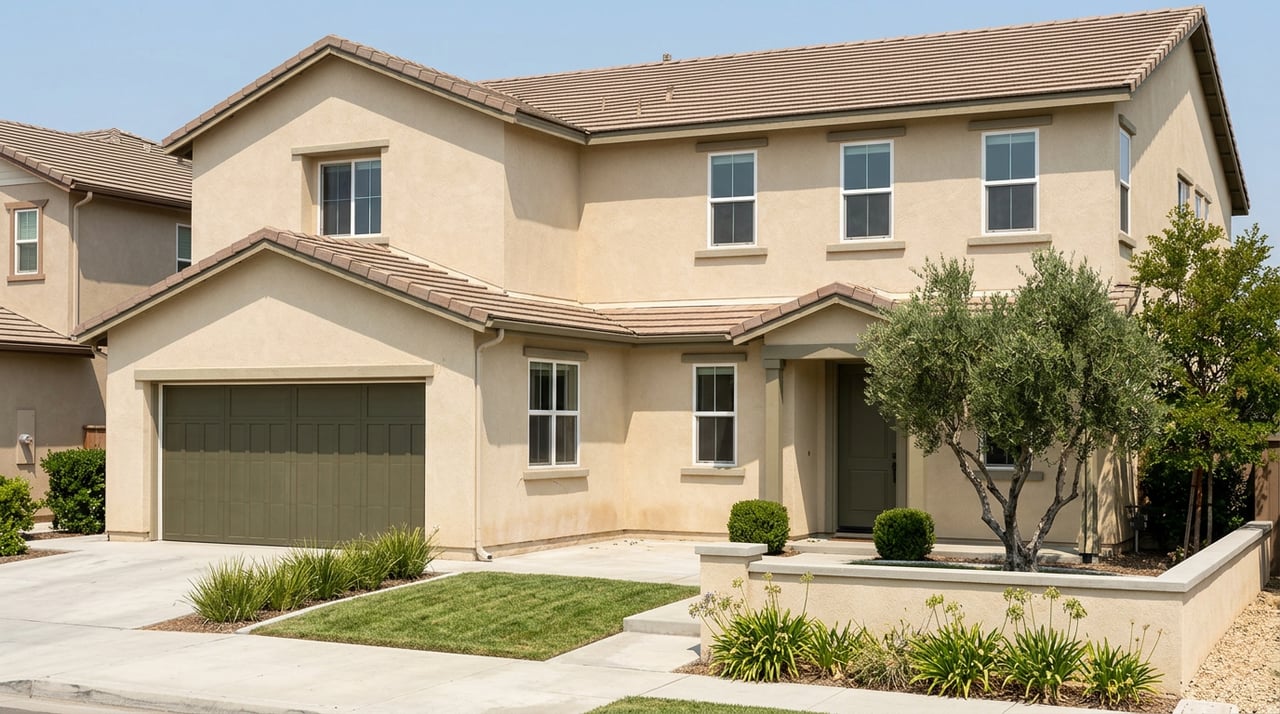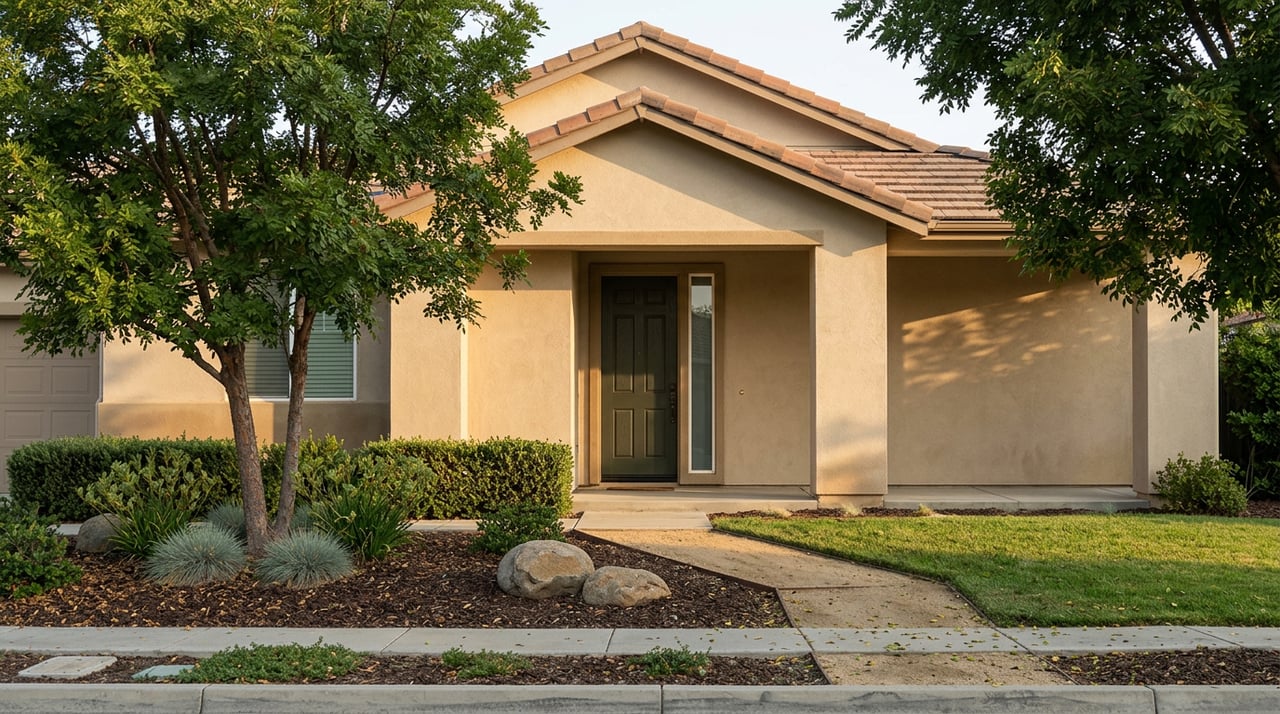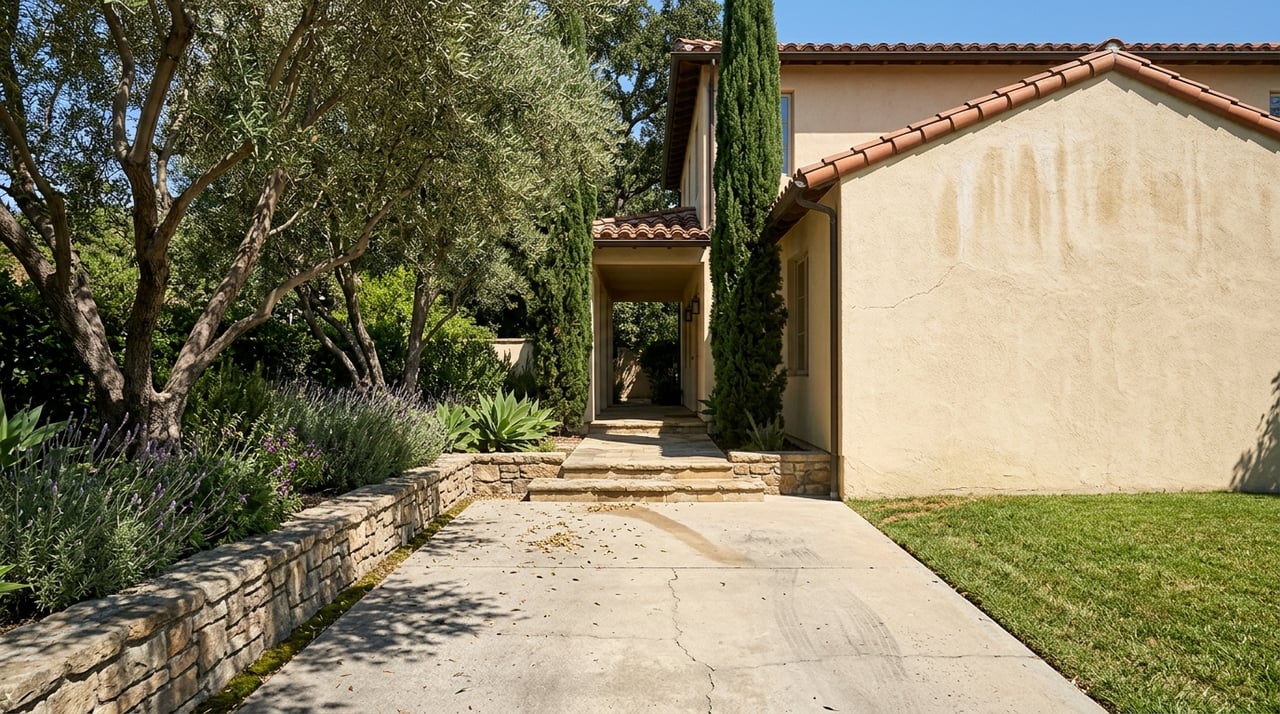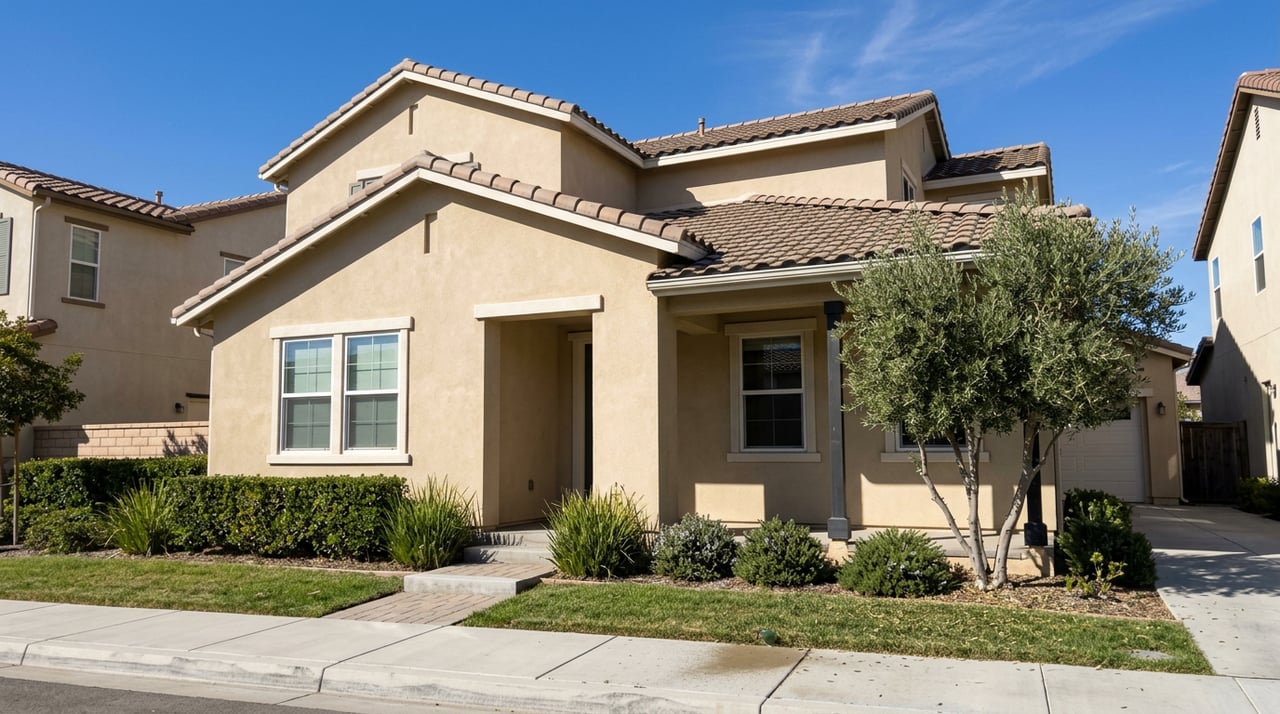
Scroll through new construction listings in north Rancho Cucamonga this year and you will run into a phrase that shows up nowhere else on a spec sheet: NO MELLO-ROOS, NO HOA. It sits in all caps, usually right under the square footage, treated with the same weight as a mountain view or a corner lot. A handful of small, limited-release communities near the north end of the city are marketing the absence of two costs as if it were an amenity.
That is worth sitting with for a second. Builders do not spend marketing space on a feature unless buyers are actively pricing for it. If "no Mello-Roos, no HOA" reads as a premium in one part of town, then having both is functioning as a quiet discount everywhere else, whether or not it shows up anywhere on the listing sheet. The thesis here is simple: two Rancho Cucamonga homes at the same list price are not the same offer once you account for where each one sits relative to these two costs, and the part that actually catches people off guard isn't the dollar amount. It's the timeline for finding out.
Where the stack actually lives
Rancho Cucamonga is not one tax and HOA environment. It's several, layered by when and where a tract was built.
Mello-Roos, formally a Community Facilities District special tax, concentrates in the newer development north of Foothill Boulevard, particularly around Day Creek and the Etiwanda area. The city carries multiple active CFDs tied to that growth, including the Rancho Etiwanda Public Facilities CFD No. 1, the Coyote Canyon Public Facilities CFD tied to the Etiwanda School District, and a run of Etiwanda School District CFDs numbered across different formation years. Newer tracts near the Victoria Gardens corridor and pockets of the northeast corridor commonly carry a CFD as well. West Rancho Cucamonga near Haven Avenue, established Terra Vista, and South RC generally do not, because that infrastructure was built and paid for before CFDs became the standard financing tool.
HOAs follow a different map, one that does not line up neatly with the CFD map. Master-planned communities including Victoria, in its Gardens, Arbors, Groves, and Windrows phases, Day Creek, The Resort, and established Terra Vista typically carry an HOA to maintain shared parks, pools, gated entries, and common landscaping, alongside newer builder communities like Sycamore Heights and Vinova. Terra Vista is the case worth flagging on its own: it sits outside the Mello-Roos footprint but still carries HOA dues, which is exactly the kind of mismatch that trips up a side-by-side comparison. Older foothill tracts in Alta Loma more often carry neither.
The two maps overlap but are not identical. A home can have Mello-Roos with no HOA. It can have an HOA with no Mello-Roos, which is Terra Vista's situation. And in the newer pockets of Etiwanda and Day Creek, it can easily have both stacked on the same property tax bill and the same monthly budget.
| Area | Mello-Roos | HOA | Approx. added monthly cost |
|---|---|---|---|
| West RC near Haven Ave, South RC | Rare | Not typical for these older, non-master-planned tracts | Close to $0 |
| Older Alta Loma tracts | Rare | Rare | Close to $0 |
| Established Terra Vista | Rare | Common | $235 to $380 in HOA dues, little to no CFD |
| Day Creek, Etiwanda north of Foothill Blvd | Common | Sometimes | $170 to $500 in CFD tax, plus $235 to $380 in dues where an HOA also applies |
| Victoria (Gardens, Arbors, Groves, Windrows), The Resort, Sycamore Heights, Vinova | Sometimes | Common | $235 to $380 in dues, plus possible CFD on top |
What the stack actually costs
HOA dues in Rancho Cucamonga generally run $235 to $380 a month this year, depending on the community and its amenity list, with the countywide median for San Bernardino County landing around $335 a month. That range covers landscaping and parks in a basic community and climbs toward the top when a community adds pools, gyms, or a gated entry.
Mello-Roos runs on its own schedule. In the Inland Empire, CFD assessments typically land between $2,000 and $6,000 a year, which works out to roughly $170 to $500 a month layered on top of the regular property tax bill. That shift moves the effective property tax rate on a Rancho Cucamonga home from a base of about 1.1 to 1.25 percent up toward 1.5 to 1.8 percent once the CFD is included.
Put the two together on a home in Day Creek or north Etiwanda that carries both, and a buyer can be looking at $400 to $800 a month in dues and special tax before the mortgage payment even enters the conversation. That is not a rounding error against a lender's debt-to-income math. A few hundred dollars a month in fixed obligations reduces how much loan a buyer qualifies for, full stop, which means the identical list price on a Haven Avenue home and a Day Creek home is not actually the identical offer once a lender runs the numbers.
The clock nobody mentions until it's running
Here is the part that surprises people mid-escrow, not because the costs are hidden, but because the two disclosure processes move on completely different timelines and nobody puts them side by side ahead of time.
Once a Rancho Cucamonga seller in an HOA community accepts an offer, California's Davis-Stirling Act puts the HOA on the clock. Under Civil Code section 4525, the seller requests the resale disclosure package from the association, and the association has ten days to deliver the full packet: governing documents, budget, reserve summary, and any pending litigation status. Ten days is a short statutory window by design, and it moves independently of anything else happening in escrow.
Mello-Roos does not have an equivalent deadline. If a seller wants to explore prepaying a CFD balance before listing, either to remove the monthly cost or to widen the buyer pool, the process starts with a phone call to the CFD administrator, whose number is printed on the property tax bill, requesting a current payoff quote. There is no statutory clock forcing a fast turnaround. The quote arrives on the administrator's schedule, and a full CFD prepayment lump sum in the Inland Empire typically runs $15,000 to $50,000 depending on the remaining balance and years left on the bond.
That gap between a ten-day statutory HOA deadline and an open-ended CFD payoff request is where a transaction can quietly stall if nobody planned for it. A seller who assumes both processes move at the same pace can end up with signed HOA disclosures in hand while still waiting on a number from the CFD side, with a buyer's contingency clock ticking the entire time.
A practical sequence for a seller in one of the newer RC communities looks like this:
- Pull the property tax bill and confirm whether a CFD line item appears, and note the administrator's contact information printed on it.
- If an HOA applies, submit the written disclosure request the day escrow opens, since the ten-day statutory clock only starts once the request goes in.
- Separately and immediately, call the CFD administrator for a current payoff quote, even if prepayment is only a maybe, so the number exists before a buyer asks for it.
- Compare the CFD prepayment lump sum against the actual pricing lift it would buy. In some cases the payoff costs more than the market credit it earns, and carrying the assessment forward is the better math.
- Keep the HOA package and the CFD quote in the same file, since a buyer's lender will eventually want both.
What it means to compare two RC listings side by side
Two homes at the same price in Rancho Cucamonga are answering different questions. A home in West RC near Haven Avenue is mostly just a mortgage payment and a base property tax bill. A home in established Terra Vista adds an HOA payment but skips the CFD tax. A home in Day Creek or north Etiwanda carrying both an HOA and a CFD is a mortgage payment plus $400 to $800 a month in fixed costs that a lender counts against the buyer's qualifying power, on top of a closing process with two disclosure clocks running on two different schedules. Neither structure is automatically the worse deal. The newer stacked communities often come with amenities and infrastructure the older ones don't have. But pricing the two the same way, without accounting for either the monthly stack or the escrow timeline, is how a buyer overpays for one and a seller underprices the other.
A short FAQ
Does Mello-Roos ever go away? CFD bonds retire on their own schedule as the underlying debt is paid down, and a seller can request a current payoff quote from the CFD administrator to see exactly how much balance and how many years remain.
Can a buyer see HOA documents before writing an offer? A buyer can ask a seller for recent HOA statements and dues history before an offer goes in, though the full statutory disclosure package under Civil Code 4525 is formally requested from the association once escrow opens on an accepted contract.
Is "no Mello-Roos, no HOA" always the better buy? It removes two monthly obligations and two disclosure processes from the equation, which simplifies both the budget and the escrow timeline, but it says nothing on its own about the home's condition, lot, or location relative to what a comparable HOA or CFD community offers for the same price.
If you're comparing a listing in Day Creek against one near Haven Avenue, or trying to figure out what a CFD payoff quote would actually mean for your net proceeds before you list, Terri Barrett has spent nearly three decades walking Rancho Cucamonga sellers and buyers through exactly this kind of paperwork. Schedule a free consultation and get the real numbers for your specific address before you write the offer or sign the listing agreement.