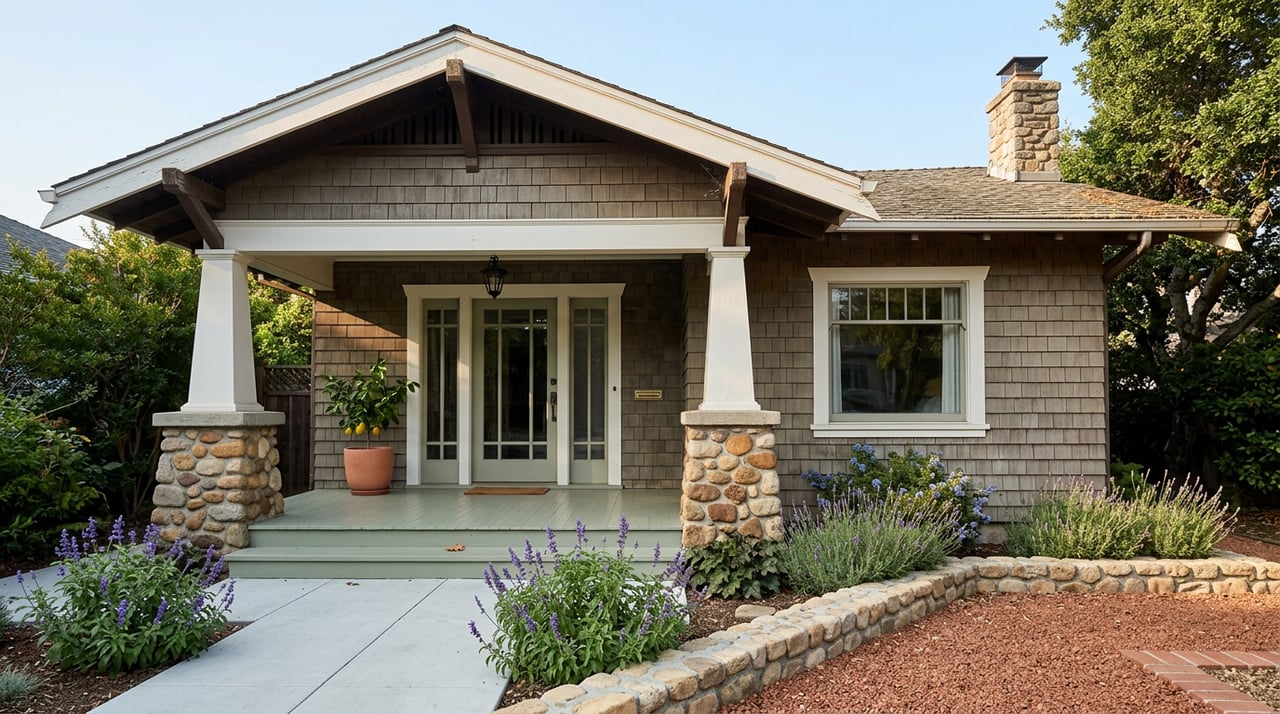
Two houses on adjacent blocks in South Redlands come to market the same week. Both are 1912 Craftsman bungalows. Both list around $780,000. One will cost the new owner meaningfully less to hold every month than the other, and the difference has nothing to do with the mortgage rate, the down payment, or the roof.
The difference is a contract recorded against one of the deeds. If you have been comparing designated historic homes in Redlands against move-in-ready houses in newer parts of town on price and square footage alone, the comparison is missing its most consequential variable. The Mills Act reprices the transaction, and because the contract transfers with the property, the buyer inherits both the discount and the obligations.
The Contract That Rides With The Deed
The Mills Act is a state program a city has to opt into, and Redlands did, by City Council action on November 20, 2012. It gives owners of designated historic properties a reduced property tax assessment in exchange for a recorded promise to preserve and restore the building. The city's own program page describes typical residential savings in Redlands at roughly 50 to 60 percent of what the tax bill would otherwise be, calculated by the San Bernardino County Assessor using a state-law formula rather than the sale price.
That's already unusual. What matters at closing is that the contract is not personal to the seller. Under state law it runs with the land. In San Diego's plain-English summary of the same program, once the agreement is recorded, "the Mills Act benefits go with the land," and new owners inherit both the benefits and the responsibilities. A buyer stepping into a Redlands home with an active Mills Act contract is stepping into an existing ten-year rehabilitation plan, and the clock does not restart.
What A Mills Act Contract Actually Reprices
The Redlands Historic District median sale price in November 2025 was around $755,000, up 9.4 percent year over year according to Redfin's neighborhood data. The city-wide median in March 2026 came in near $693,000. Read fast, that looks like a straightforward premium: pay roughly $60,000 more to buy inside the districts. Read the tax line, and the arithmetic bends.
A rough sketch of how the monthly picture can shift, using Redlands' stated 50 to 60 percent residential savings range:
| Scenario | Approx. purchase price | Base property tax (approx. 1.1%) | With Mills Act contract (55% reduction) | Monthly tax difference |
|---|---|---|---|---|
| Non-designated, comparable home | $693,000 | ~$7,620/year | n/a | — |
| Historic District, no Mills Act contract | $755,000 | ~$8,305/year | n/a | +$57/mo vs. non-designated |
| Historic District, active Mills Act contract | $755,000 | ~$8,305/year | ~$3,740/year | −$323/mo vs. non-designated |
Those numbers are illustrative, not a quote. The County Assessor sets the actual value under Revenue and Taxation Code §§ 439–439.4, and the savings vary. San Diego's public FAQ notes that Mills Act reductions statewide have ranged from 20 percent to 70 percent depending on the property's age, comparable rents, and prior assessed basis. What matters for a buyer is that the list price alone is not the cost of ownership, and a contract already recorded on the property can outweigh a five- or six-figure difference in list price over a hold period.
The Trade You're Signing Into
A Mills Act contract is not free money. It is a working document. Redlands' program requires a Ten-Year Work Plan showing how the tax savings will be reinvested in the property's character-defining features, and the city's guidance is explicit that the annual cumulative expenditures must meet or exceed the annual tax savings. An annual report goes to the Historic Preservation Officer at the Planning Division.
The other half of the trade is design review. Anything designated as a Historic or Landmark Resource, or located inside one of the city's eight numbered historic districts, needs a Certificate of Appropriateness from the Historic & Scenic Preservation Commission before certain exterior work. The Commission is a seven-member citizen body that meets on the first Thursday of each month in the City Council Chamber at 35 Cajon Street. What that means in practice for a buyer thinking about renovations:
- Reviewed by the Commission or staff: window replacements, roofing material changes, front porch alterations, exterior paint scheme changes on landmark properties, additions visible from the street, and any demolition of a structure over fifty years old, whether designated or not.
- Generally not reviewed: interior remodels, landscaping unless specifically designated, and exterior changes to structures under fifty years old.
- A cautionary example from the city's own guidance: swapping wood-frame windows for aluminum would likely be found inappropriate; combining a kitchen and dining room into one great room, on the other hand, generally is not the Commission's concern.
A buyer who intends to gut and modernize the exterior of a designated Craftsman is a buyer who has misread the deal. A buyer who wants a preserved bungalow with a modern interior and is willing to work within an approved plan is exactly who the program was written for.
Owners who take the contract seriously tend to spend more on their homes over ten years than they save in taxes. What they buy with the difference is a house whose story and preservation quality show up in the resale.
That framing comes from the Redlands Conservancy's own commentary in the local paper, drawing on Kathy Behrens' experience restoring the A.E. Taylor House on West Olive Avenue with Mills Act support to replace windows, restore the front door, and re-roof with original shingle profiles. It's a useful frame for a buyer running the math: the tax savings are real, but they are also earmarked.
Why The Program In Redlands Behaves Differently Than Some Others
Not every California city with a Mills Act ordinance has kept it healthy. In March 2026, the Redwood City Council voted 6-1 to suspend new Mills Act applications while it reviewed self-reporting, inspection frequency, and whether some participants had overstated improvement costs, according to Redwood City Pulse. That suspension is a useful contrast, not a warning about Redlands.
Redlands has kept the program small and deliberate. The city may approve up to seven contracts per year, five residential and two commercial, with an application fee of $1,160 and a review timeline of roughly three to four months through the Commission and then a public hearing at City Council. In 2019, Resolution No. 7947 removed a previous restriction that had capped eligible single-family valuations at $1 million, which quietly opened the program to the mid- and upper-tier historic homes that a $700,000-plus Redlands buyer is likely to be looking at today. Informational brochures have gone out to properties inside the eight designated districts, and the Historic & Scenic Preservation Commission is staffed with credentialed members in history, architectural history, and planning.
For a buyer, the practical takeaway from that comparison is that Redlands' program is functioning, contracts are being honored, and a recorded contract on a target property is a real asset with predictable rules, not a distressed policy that may vanish.
What To Ask Before You Write The Offer
The one question that separates an informed offer from a guess is whether a Mills Act contract is already recorded against the property. That answer changes what the seller's disclosures should include, what the title report will show, and what your first-year and tenth-year holding costs look like.
If the answer is yes, the follow-ups are: what year does the current ten-year term reset to, what commitments in the recorded Work Plan remain unfulfilled, and what is the seller's most recent annual report on file with the Planning Division. If the answer is no, but the house is inside one of the eight historic districts or is at least fifty years old and might qualify, the follow-up is whether you want to pursue a new contract yourself. New designations and Mills Act contracts can be processed concurrently, applications are accepted year-round, and there is no longer a valuation ceiling, but you are stepping into the queue for one of seven annual approvals and a review timeline that runs several months.
None of this is tax advice. It is transaction geography. Two Redlands homes at the same list price are not the same price, and a buyer who understands why is a buyer who writes a more accurate offer.
A Short FAQ
Does the tax reduction stay if I renovate the interior? Yes. The Mills Act obligations attach to preservation of character-defining features, and interior alterations generally are not subject to Commission review in Redlands.
Can I cancel the contract if I change my mind after buying? The agreement has a ten-year initial term and auto-renews annually. Either party can serve notice of non-renewal, at which point the contract winds down over the remaining ten years and the tax basis gradually resets. It is not a switch you flip at closing.
Does every historic home in Redlands have a Mills Act contract? No. Redlands has more than 700 designated historic structures across landmark, local resource, and district listings, but only a portion are under active Mills Act contracts. Designation and Mills Act are separate steps.
What if the house is old but not designated? Structures over fifty years old are subject to some Commission oversight, particularly for demolition, even without designation. If the house qualifies, you or the seller can pursue local designation and a Mills Act contract concurrently through the Planning Division at the One Stop Permit Center, 35 Cajon Street, Suite 15-A.
If you are weighing a designated Redlands home against a comparable house elsewhere in town, the offer strategy is different than a straight price-per-square-foot read suggests. Terri Barrett has worked Inland Empire transactions for close to three decades and can walk through the title report, the recorded contract, and the ten-year plan with you before you write. Schedule a free consultation and bring the address.