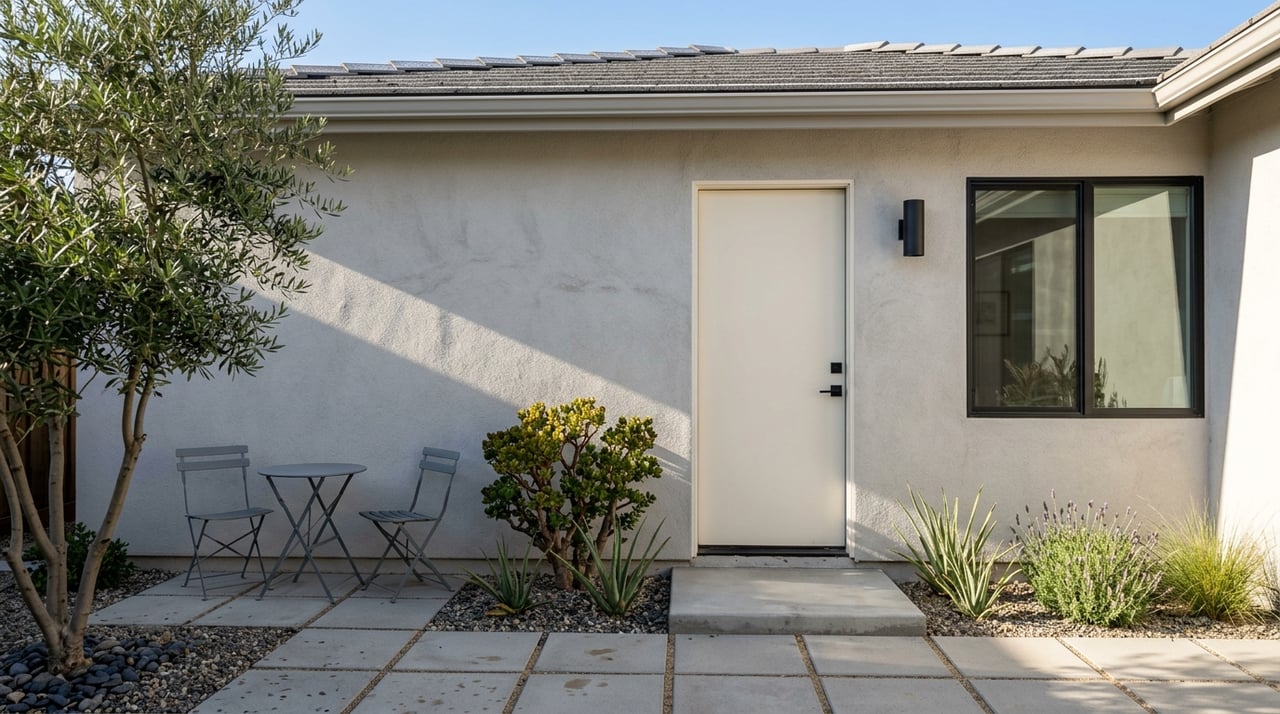
If you have space for an ADU on your Redlands property, you may be sitting on more income potential than you think. Many homeowners want extra cash flow, but they also want a rental plan that feels realistic, legal, and manageable. This guide will show you what current Redlands data suggests about ADU rental income, what local rules matter most, and how to think about your next steps with confidence. Let’s dive in.
Why Redlands Works for ADU Rentals
Redlands has several signs of a workable long-term ADU rental market. The city has 74,279 residents, 25,152 households, a median household income of $105,041, and a 2020 to 2024 median gross rent of $2,005. The owner-occupied housing rate is 56.8%, which still leaves a meaningful renter base in the city.
City profile data also points to practical demand drivers. Redlands has access to I-10, SR-210, Arrow and Metrolink service, and the University of Redlands. That combination suggests potential interest from commuters, university-connected renters, and other small households looking for private housing with a smaller footprint.
Redlands also treats ADUs as part of its housing strategy. The city’s Housing Element says new ADU construction is an important tool for adding more affordable housing throughout the community. That does not guarantee rent performance, but it does support the idea that ADUs fit the local housing picture.
What Rent Range Looks Realistic
If you are trying to estimate income, the smartest approach is to use a range instead of one perfect number. Current rental platform data places Redlands in the low-to-mid $2,000s overall, but the numbers vary by source and property type. That means your ADU income plan should be grounded in comparison, not guesswork.
Apartments.com reports an average Redlands rent of $2,064 per month as of May 2026. On that platform, studios average about $1,743, one-bedroom units about $2,064, and two-bedroom units about $2,290. Zillow reports an all-property average of $2,357, with studios around $1,795, one-bedrooms around $1,895, and two-bedrooms around $2,200.
Because those platforms use different methods, it is better to treat them as a pricing band. For many new Redlands ADUs, a practical planning range is often in the low-$2,000s to mid-$2,000s per month. Smaller conversions or simpler layouts may land toward the lower end, while detached units with more privacy, stronger finishes, or more functional layouts may support the upper end.
Zillow currently classifies Redlands as a cool rental market and shows 154 active rental listings. That matters because you should not assume that limited supply alone will push your rent to the top of the market. Careful pricing, clean presentation, and a well-matched rental strategy still matter.
What Annual Income Could Mean
An ADU renting in the low-$2,000s to mid-$2,000s can produce meaningful gross income. Using current market data, that works out to about $24,000 to $28,000 per year before vacancy and operating costs. It is a helpful planning benchmark, not a promise of profit.
Your actual return depends on more than rent alone. Setup costs, maintenance, utilities, leasing time, and any management needs all affect the real picture. A reliable rental usually comes from steady occupancy and realistic pricing, not from chasing the highest possible number.
Redlands ADU Rules That Matter Most
Before you market any unit, you need to understand the basic rules that shape how an ADU can be used. Redlands says it uses current state law for ADU construction, and the city’s ADU page notes that Ordinance No. 2993 had not yet been approved or adopted at the time of the cited update. California HCD also updated its ADU Handbook in March 2026 with an addendum reflecting state-law changes effective January 1, 2026, so it is important to verify current standards before you build or lease.
ADUs Can Be Rented, Not Sold Separately
In Redlands, an ADU may be rented separately from the main home. However, it cannot be sold separately from the primary residence. For most homeowners, that means the value is in added flexibility and rental income, not in carving off a standalone resale unit.
Rentals Must Be 30 Days or Longer
This is one of the biggest takeaways for Redlands owners. All ADUs must be rented for at least 30 days. In practical terms, that means ADUs here are a fit for long-term or medium-term rentals, not nightly or weekly stays.
Owner Occupancy Is Not Generally Required
California law does not impose a general owner-occupancy requirement for ADUs, and Redlands repeats that point on its ADU page. That can give owners more flexibility when planning how to use both the main home and the ADU. Still, you should confirm how current rules apply to your exact property and unit type.
Size Limits Shape Your Plan
Detached ADUs may be up to 1,200 square feet. Attached ADUs may be up to 50% of the primary home’s floor area, with at least 800 square feet allowed. JADUs are capped at 500 square feet.
These size limits matter because layout affects rent potential. Square footage, bedroom count, privacy, and functionality all play a role in where your ADU may fit within the local rent range.
Parking Rules May Help Feasibility
Parking rules can make a big difference in cost and design. Redlands states that one parking space may be required for a detached ADU, and tandem parking is allowed. No parking is required for attached ADUs, JADUs, converted structures, or certain sites near transit, in historic districts, where on-street permits are not offered, or near a car-share vehicle.
There is another important point for conversion projects. If a garage, carport, or other parking space is demolished or converted for the ADU, replacement parking cannot be required. For some homeowners, that can improve project feasibility.
Fees and Utility Costs Affect Returns
Fee exposure matters when you run the numbers. Redlands says no impact fee can be charged for ADUs under 750 square feet, while units at 750 square feet or more are charged proportionately. Some ADUs may also require separate utility connections, but those charges must be proportionate and limited to the reasonable cost of service.
That means a smaller unit may offer cost advantages on the front end. It does not make a smaller ADU the right choice for every property, but it is an important part of your planning math.
Design Compatibility Still Counts
Redlands asks that the ADU’s style, materials, and colors be the same as or similar to the primary residence. This can matter during the approval process, and it can also help with rental appeal. A unit that feels well integrated with the property often shows better and feels more polished to prospective tenants.
What Helps an ADU Rent Well
In a market where renters have options, your ADU needs to feel useful, private, and worth the monthly cost. Bigger is not always better. Often, the best-performing units are the ones that make efficient use of space and feel easy to live in.
Features that may support stronger rental positioning include:
- A clear and private entrance
- Good natural light
- Functional kitchen and storage space
- In-unit laundry, if feasible
- Durable, easy-care finishes
- Thoughtful sound separation from the main home
- A layout that matches the expected renter profile
HCD guidance also notes that affordability analysis should consider factors like square footage, bedroom count, amenities, age, general location, and proximity to public transportation. That is a helpful reminder that rent is shaped by the full package, not by square footage alone.
How to Screen Tenants Consistently
Reliable rental income depends on the tenant, not just the unit. A careful screening process can reduce stress, missed rent, and turnover. The key is to use written criteria and apply them consistently to every applicant.
Landlords may review items such as identifying information, work and income history, credit and payment history, housing court or eviction records, criminal records, missed rent, bankruptcy, and lawsuit history. Tenant screening companies may also provide scores or recommendations.
If you use a consumer report, federal law requires a permissible purpose, proper certification of use, and an adverse-action notice if you deny the application or make terms less favorable based in whole or in part on that report. In California, FEHA applies to landlords and tenant screening companies and prohibits discrimination in the sale, rental, or occupancy of most housing accommodations.
A practical takeaway is simple. Use objective, written screening standards and apply them the same way to each applicant. Also avoid blanket policies, such as refusing to rent to anyone with a criminal record, because that may create fair housing concerns.
A Smart Way to Think About ADU Income
For most Redlands owners, an ADU is best viewed as a 30-plus-day rental asset. That framing fits local rules and lines up better with the actual market than a short-term rental mindset. When you pair realistic pricing with consistent screening and a unit that fits local demand, the income can be steady and useful.
This is also where experience matters. Whether you are deciding if an ADU makes sense for your lot, weighing resale value against rental income, or thinking about leasing and management, a local strategy can save you time and help you avoid expensive missteps.
If you are thinking about building, renting, buying, or managing an ADU property in Redlands or the Inland Empire, Terri Barrett can help you look at the numbers, the local market, and your next move with clarity.
FAQs
What is a realistic rent range for a Redlands ADU?
- Based on current platform data, many Redlands ADUs will likely plan within the low-$2,000s to mid-$2,000s per month, depending on size, privacy, finishes, and layout.
Can you use a Redlands ADU as a short-term rental?
- No. Redlands states that ADUs must be rented for at least 30 days, so they are better suited for long-term or medium-term rental use.
Does a Redlands ADU need owner occupancy?
- Redlands states that California law does not generally require owner occupancy for ADUs, though you should confirm current rules for your specific property and unit type.
How much yearly income can a Redlands ADU produce?
- Using a rough gross-income estimate based on current rents, a Redlands ADU in the low-$2,000s to mid-$2,000s may generate about $24,000 to $28,000 per year before vacancy and operating costs.
What size can an ADU be in Redlands?
- Detached ADUs may be up to 1,200 square feet, attached ADUs may be up to 50% of the primary home’s floor area with at least 800 square feet allowed, and JADUs are capped at 500 square feet.
What should Redlands landlords know about tenant screening?
- Use written, objective screening criteria, apply them consistently to all applicants, and follow consumer-report rules if you use a screening report as part of your decision.